INSIDE ARAMNESS | NOVEMBER 28, 2025
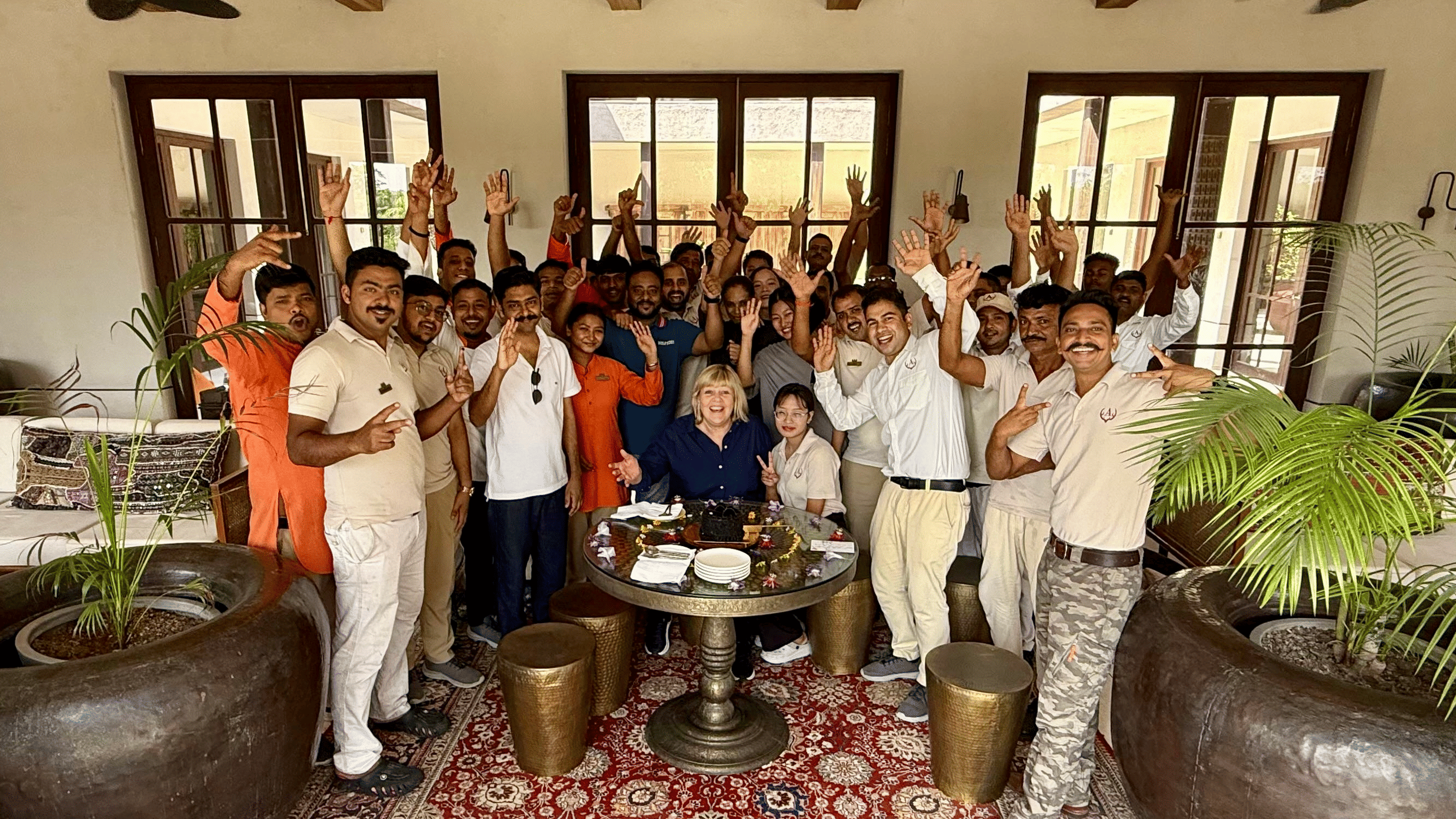
"Sustainable is not always frugal. Luxury doesn't have to be brash indulgence. And there is a space where the two can (and must) beautifully coexist."
That's what a recent guest wrote about her stay at Aramness.
She walked in imagining opulence and selfish indulgence. "The thought of 'I shouldn't be here' was on top of my mind," she admitted.
She left wanting to be a better person.
I've been with Aramness since before we opened our doors, through the pre-launch chaos and the impossible choices. And reading our guest’s words felt like watching someone discover what we've been quietly building all along.
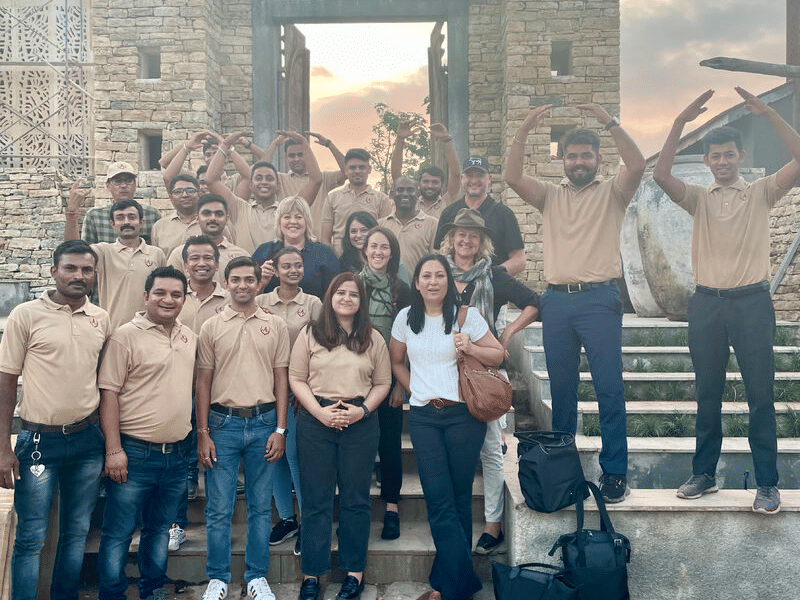
It was June 2021, and I remember standing in what would become our entrance during construction, surrounded by materials and dust and so much joy. I also remember the day each of us in the pre-opening team planted our first tree in the lodge. We named them, these trees that would grow alongside Aramness. One day, during a walk around the property, the construction crew found a snake. Our naturalists stepped in, carefully relocating it back to the wild where it belonged. Every tree we planted, every creature we chose to protect, taught me that this land had its own logic, and I was just beginning to understand it.
The Operational Choices
We planted 5,000 indigenous trees. Not as landscaping, but as restoration. We dug watering holes to collect rainwater so the wildlife has water year-round, even in the harsh summer months of Gir when natural sources dry up. We built a sewage treatment plant that recycles 75% of our grey water back into the property. And our kitchen waste goes into a biogas plant. That biogas cooks 30% of our staff meals. The biofertilizer it produces goes into our Edible Garden, which grows much of what ends up on guest plates. The water bottling plant, the first in-house one in Gir, came from a simple refusal: single-use plastic doesn’t belong here. We built the infrastructure to eliminate it entirely.
These systems aren't talking points. They're the foundation of how we operate. They work in the background, invisible to most guests, essential to everything.
The Design Choices
I remember the day the jali screens were installed in our lodge, seeing how the sal leaf motifs filtered sunlight into patterns that changed through the day. Then there was the lippan work and the brass door handles. We commissioned the handles specifically for Aramness, each one modelled after Gir's wildlife. The carved doors to each kothi came from old havelis: reclaimed, restored, each one unique with its own history. Wooden blocks that were once used for hand block printing? They became our counters. Even the pathways tell a story, we sourced stones from the local quarry. The textiles were handwoven, and the marble was carved by hand. Every material choice came down to one question: does this honour where we are, or could it exist anywhere?
We deliberately kept our room inventory low. We have 18 Kothis. Each Kothi has green space around it. Not for aesthetics, though it's beautiful, but because peaceful coexistence with the wilderness requires space. You can't pack rooms tightly and claim to respect the ecosystem.
The Food Philosophy
We grow what we can in our Edible Garden. What we can't grow, we source from the neighbouring villages, buying directly from local farmers, creating economic partnerships that benefit the communities around us.
Our menus shift with the seasons. When something isn't available, we don't fly it in. We adjust. We create. We work within the rhythms of this place.
Does it require our kitchen team to think differently every day? Absolutely. But it creates food that tastes like Gir, rooted in this soil, shaped by these seasons. Food that tells the story of where you are.
The People
60-65% of our staff come from the neighbouring village of Haripur. These are communities that have lived alongside Gir's lions for generations. They know this ecosystem in ways we're still learning.
Yes, the training takes longer and systems take time to establish. But what we've built is a team that doesn't just work here, they care about this place in ways that can't be manufactured. The happiness our guests notice in our staff? It's the quiet pride of building something meaningful together, of seeing their community woven into every part of this place.
What I've Come To Understand About Luxury
For too long, luxury has meant insulation from place. Perfect climate control. Imported everything. Experiences that could happen anywhere. The underlying message: you're too sophisticated to be affected by where you are. But real luxury should be about connection, not separation. It's understanding that the vegetables on your plate grew within sight. That the artisan who crafted the detail in your room is from down the road, preserving skills passed down through generations. Recognizing that the forest beyond isn't a backdrop, it's a living ecosystem you're privileged to witness.
We exist in service of the forest, not the other way around. The lions were here first. The communities were here first. Everything we do is shaped by that hierarchy. Does that make operations more complex? Daily. But complexity is the cost of doing this honestly.
Because that guest who walked in looking for evidence that luxury is selfish found something else entirely. Because all these years have proven, imperfectly, messily, that sustainable doesn't mean sacrifice and luxury doesn't mean extraction. When you invite people into a place built on respect: for land, wildlife, communities, culture, they feel it. And they're changed by it.
This month marks four years of Aramness. Four years of choosing the harder way. Four years of believing that coexistence isn't just possible - it's the only version of luxury that deserves to exist in wild places.

